
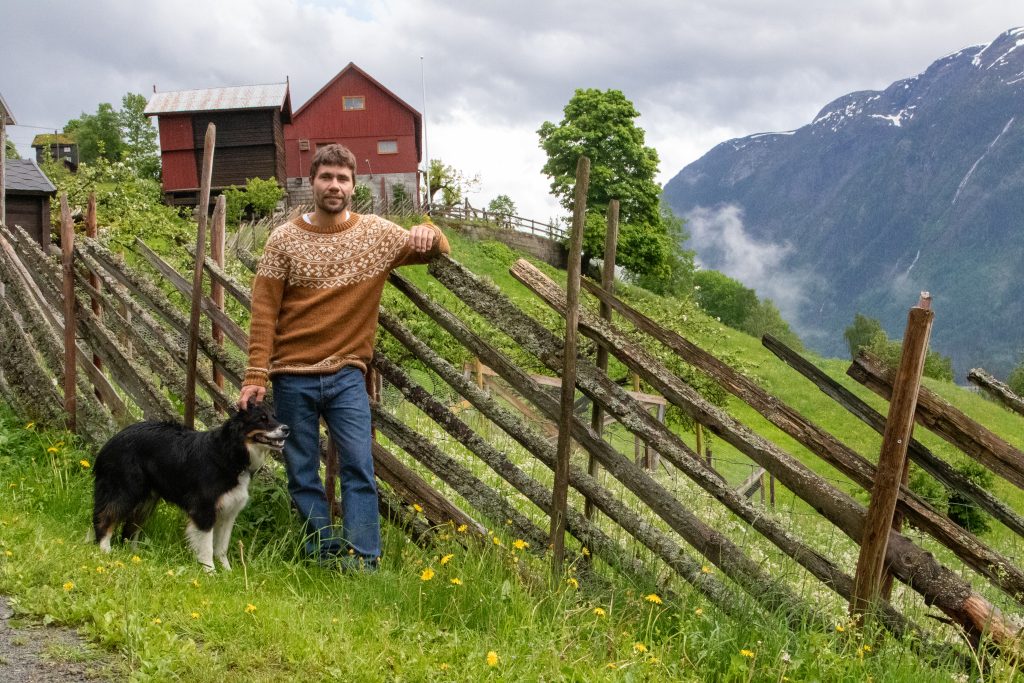
The farmer on the hill: Rørtveit Gard in Telemark
Meet Gunleik Mæland, a farmer from lush Telemark who sells almost all of his produce to two nearby hotels. He doesn't get rich, but the collaboration ensures his existence. Then it's not the dream of money that drives him.
A farm life in steep Telemark terrain
Rough terrain, conservation work, pasture management, leasing, endless working days, fickle weather and every conceivable unforeseen situation – the life of a Norwegian farmer is rarely easy, and at Rørtveit Gard in West Telemark it is downright tough. Not that it stops Gunleik Mæland, but it is natural to ask the question whether he sometimes feels like he is fighting against windmills, that it is the toughest part?
– Yes, I do. I've been doing that for many years, but it's going well, he says with a warm smile.
The first thing that strikes you when you come face to face with Gunleik Mæland is that here is a man who cares about nature and animals. On a grassy and sedge-covered slope with a view of the pancake-flat Flatdal – a name chosen with care – and the dramatic Skorvefjell opposite, there is a house, barn, storehouse, bakery, and a few other buildings, in an exceptionally idyllic setting. Here lives the farmer with what can safely be called a candidate for the world's best workplace – demanding as life can be here.
Mæland has two large and at the same time small customers, Nutheim Gjestgiveri, which is located a couple of kilometers further down towards the valley floor, and Tuddal Høyfjellshotell, an hour's drive away. Neither of these can be called tourist machines, and both have a very limited number of rooms. Nevertheless, they buy practically all the meat he can get from cows, pigs and lambs, in addition to some dairy products, apple juice and other things. With some sales to private customers in addition, Gunleik Mæland makes a living from farming. It is hard work, and he rarely has time off, but fortunately he is not alone on Rørtveit.
Three generations at Rørtveit Gard
– Mom and dad also live here in the yard, in the old house that has been completely renovated, and I live in their old house from the 90s with my sons. We are three generations involved in the operation, Gunleik says proudly.
The eldest, Olav, is almost 16 and a whiz at everything to do with engines, and he is both hardworking and interested. Right now he is deployed at the Eiksenteret as a tractor mechanic. The effort he puts into the farm when he is not at school is invaluable, we get the impression.
– He is very important in the technical aspects, and is also involved in the barn. There is also the middle one, Halvor, and he is involved a lot in the apple orchard. He is also involved in the sheep production. Then I have a five-year-old grandson. The fact that we are three generations on the farm is one of the reasons why we can achieve this.
As if this wasn't enough, Gunleik's girlfriend Marit and her three children show up as often as they can to help out. They are particularly interested in animal care and cheese making and are a huge help, he says.
– This is a fairly extensive multitasking job. That's why it's good to have many hands.
Gunleik also has some local youth who help out on occasion, and a couple of adults who work part-time. This is absolutely necessary to cope with everything that needs to be done.
“We are a team,” he says happily.
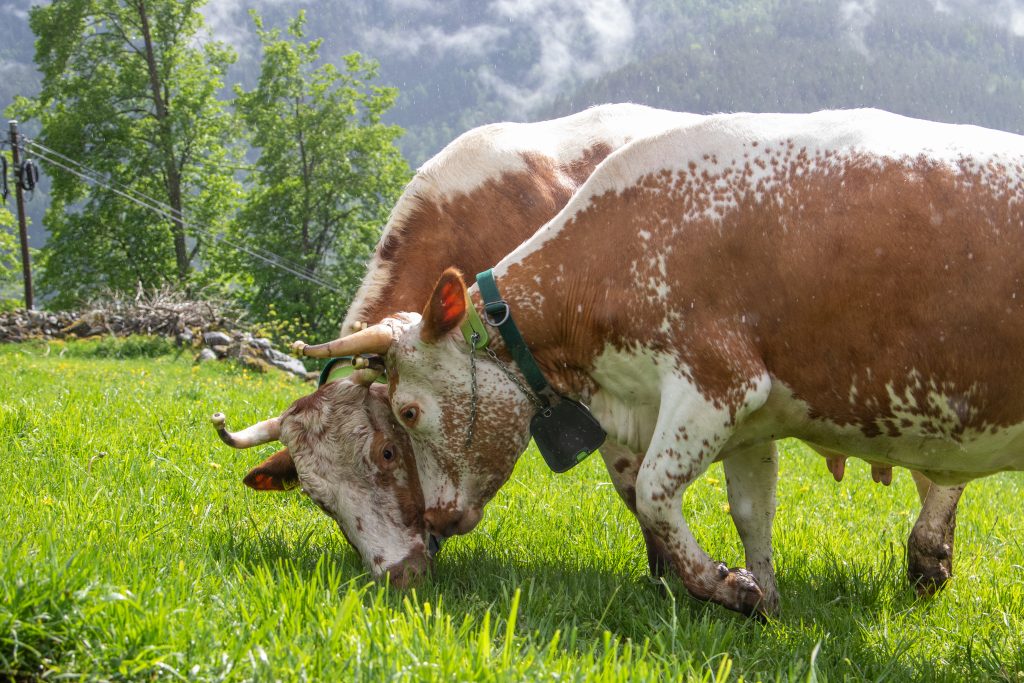
Telemark cattle, cattle farming and old Norwegian breeds
Rørtveit Gard mainly raises dairy cows, and to be precise, they are Telemark cows. They have horns decorated with horn buttons, both for safety reasons and because Gunleik thinks it looks nice.
– We exhibit them at Dyrsku'n when we can, and I think it is important to take care of the old endangered breed. There are only 100 such animals that are milked in the whole country, and I have 14 of them here. For me this is important conservation work. Solveig and Malin and Einar also use it in their own storytelling, says Gunleik. He is referring to Solveig Barstad, who runs Nutheim Gjestgiveri, and Einar Zakkæus and Malin Torsdatter Gurholt, who run Tuddal Høyfjellshotell, his two main customers.
– I am very happy that they are doing it, because it is expensive work. It would have been more profitable for me to have the inbred breed NRF (Norwegian Red Cattle), but it is important to preserve the culture and traditions and the old dairy breed that is endemic to this area.
– And that's why you depend on partners like Nutheim and Tuddal?
– Absolutely. It allows this to go around. I also have 85 winter-fed sheep that have had almost 180 lambs. They are mostly of the Farga Spæl breed, a mottled sheep with a lot of wool. It is also an older Norwegian breed that fits very well here. Rørtveit is a type of alpine farm, and we have to adapt to the landscape we operate in. We operate several farms in the hamlet here, up to 12 of them I think. There are small farms over here that we can borrow or rent, and that means we have enough land for what we do.
Gunleik explains that it is an expensive way to operate, with so many small plots. It is practically the opposite of operating industrially, inefficiently but rewarding in other ways.
– Thanks to the hotels, we can do it this way.
A small business is a collaboration with Nutheim where Gunleik takes groups around the area. He picks them up down the hillside and takes them to the farm where he proudly shows off the small farm. It is also a good opportunity for him to serve some of the cured meats he produces. Solveig at Nutheim also enjoys it, while Einar at Tuddal cures his own hams from meat he buys from Gunleik.
– The cured meat is also sold to customers who come to the farm to shop. They have ordered in advance, and delivery is before Christmas. The animals have been outside all summer, and when the slaughter season is in the fall, they come straight from the mountains. That way they retain the good taste of the mountain grass.
– You don't use a mobile slaughterhouse?
– No, unfortunately not. We have to use the commercial slaughterhouse. The regulations are quite strict, and there is no mobile slaughter in the area here, but we use a local meat cutter. Something, like what we are going to cure, we cut here on the farm, and Tuddal cuts everything himself. And cures. It is something that we plan so that he gets the meat when the apprentices are in place, Gunleik says.
Then everything is usually ready for Monday morning when it is a bit quiet at the hotel, and Einar Zakkæus Gurholt can butcher the whole animal in the kitchen.
– Then the chef gets it exactly how he wants it, and that's really nice. The apprentices at Tuddal are also lucky. Unfortunately, it's not that common anymore for chefs to butcher the animals themselves, and then they gain knowledge about all the parts and learn how to use the whole animal.
When Gunleik talks about his animals being in the mountains all summer, he is referring to the stable, or farm, he owns. He stays there all summer.
– I bring all my animals with me, and up there we also have a small cheese factory. It's quite new, but in old buildings, so it looks like it's always been there. We've just started making some cheese, and our butter won silver in the Norwegian Championships last year. It was the first year we made butter, so it was really fun. Solveig and Einar use a lot of that butter, says Gunleik happily.
Cows, sheep and pigs are all on the farm – or “the stable”, as he says – and the pigs are fed with leftovers from cheese production, “whey and things like that”. Before they are slaughtered in the autumn, they are also given some apples. Gunleik’s pigs live good lives.
“They will be very good too,” he confirms.
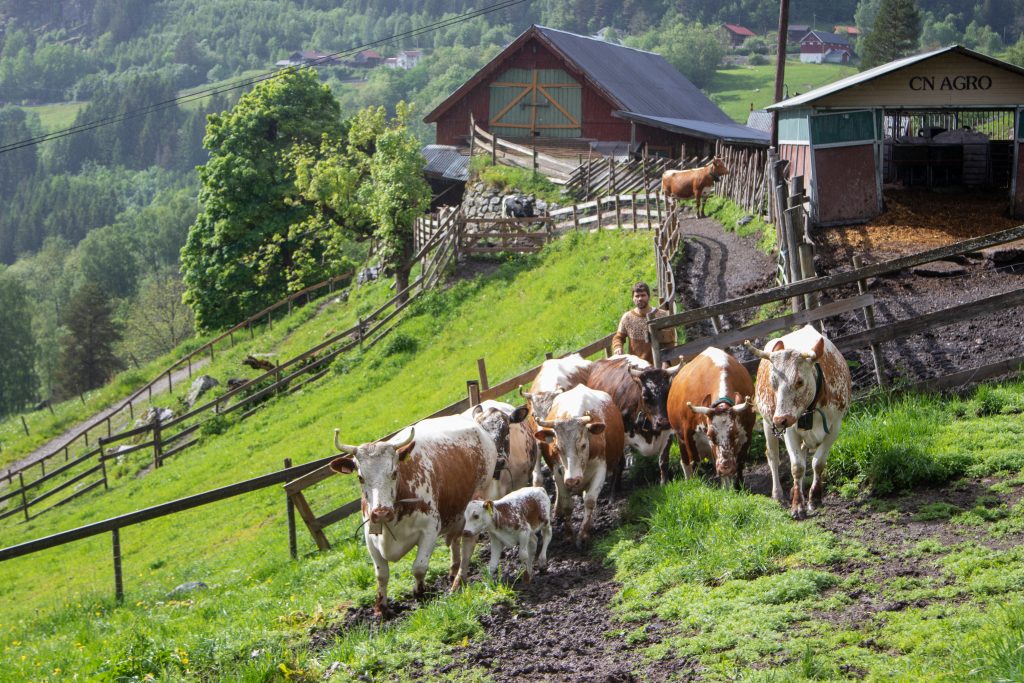
Apple cider, flower meadows and cultural landscapes
Apples are part of the operation at Rørtveit.
“Now we are standing in the largest part of the apple orchard,” says Gunleik, pointing around.
– It was planted in 1915, and it is still very lush and bears a lot of fruit. The area is not very large, but there are a lot of apples here. It is also pruned and treated gently, and that is what my mother does. We take good care of these old trees. We are talking about over two tons of apples that are pressed into apple juice, and it goes to the hotels. It is also organically certified.
Otherwise, there is a lot of grass production on the farm. Gunleik also tends the flower meadows, which are used in the feed for his animals.
– It's part of the cycle here. I think it's important to take care of the flower meadows. I'm genuinely concerned about it. UKL Hjartdal and Svartdal (UKL stands for "Selected Cultural Landscapes") has provided me with a special mower that I can use on the slopes here and that is gentle on the flower meadows. It's a finger mower that cuts the grass very finely. It mows the grass instead of just mowing it like a regular machine.
The alpine slopes at Rørtveit are only mowed once a year to allow the flowers to pollinate, and biologists thrive here because they find so many rare species. This also applies to several of the other farms Gunleik runs. The idea of conservation lives strongly in him.
– Because of the work with the flower meadows and all the farms I run, and the mower I have worked hard to have the municipalities of Hjartdal and Svartdal purchase, I have been nominated for the national cultural landscape award this year, as the candidate for Vestfold and Telemark, Gunleik says proudly. He believes that the nomination could be due to several things, but primarily the work with the machine that processes as much as 600 acres in the area.
– Most of it is land that I manage, but there is also some more in Hjartdal and Svartdal, which are nationally designated cultural landscape areas. I have also taken care of all the old buildings on the farm, and I welcome school classes that have a regular farm day in fifth grade. Then they come to me one day in August. Then you see a little bit of how the ripple effects help to lift the area in a way that is very sustainable. Sustainability is a very used word now, but I am talking about proper sustainability, says Gunleik, demanding to be believed.
In this part of Telemark, considerable efforts have been made to prevent emigration. The fact that it has proven relatively successful is probably due to farms like Rørtveit to some extent. Gunleik showcases and preserves the area's history, and sends signals to rising generations about its importance. Other key building blocks in this work are hotels like Nutheim and Tuddal. That you can also go to a pub in a small village in West Telemark is not a given, Gunleik points out, and he also highlights the very good local shop they have.
– There are many who are heading in the right direction.
– Tell us about the local store.
– It's Joker Flatdal, a very well-run shop. The couple who run it are concerned with the same things we're talking about now, taking care of the local and giving back to the village in different ways. It has a lot of ripple effects, like people coming from Seljord and other neighboring villages to shop here, simply because that shop is so good. Then you've really achieved a lot. I've had a lot of food there, and I've delivered a lot of milk in glass bottles. It's very popular. And butter of course. They're very active on Instagram too, and when they post things there, it disappears from the shelves right away. So there's a good mood, and... No, it's a fantastic shop, says Gunleik and smiles broadly.
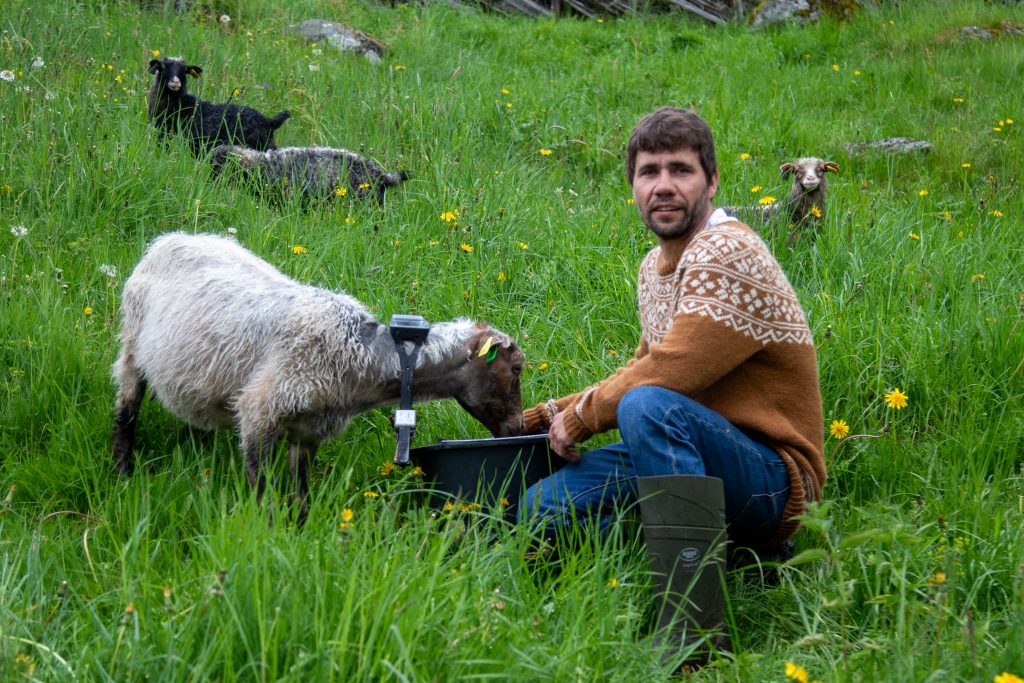
When the farmer meets the chef
In addition to Nutheim and Tuddal, Rørtveit Gard theoretically has the opportunity to supply another hotel, but Gunleik finds it difficult to get in as many hotels and restaurants are chain-managed. This means there are many links to go through, so it is not something he is actively working on.
– The unique thing about Nutheim and Tuddal is that the chefs own the hotels. Both Solveig and Einar understand that it is good for their own marketing to use local food. It has good ripple effects, and they see the quality of the ingredients. The two of them account for about 80 percent of my sales, but I have increased production a little so that I could have another hotel.
Not only is the collaboration with Nutheim and Tuddal crucial to Rørtveit's existence, it also generates an interaction between the parties based on quality at all levels, and mutual trust and respect. In separate interviews, Solveig Barstad and Einar Zakkæus Gurholt will talk about the collaboration from their perspectives, but what is absolutely clear is that all these actors – the farmer and the chefs – exist in a mutual, fruitful and highly interdependent relationship.
The ingredients Gunleik produces end up on the plates of the two hotels' guests, for breakfast, lunch and dinner. He is of course not the only one who supplies food to Nutheim and Tuddal, but his ingredients dominate their menus in terms of meat and, to some extent, dairy.
There is something beautiful and genuine about this symbiosis where the farmer meets the chef and vice versa. Gunleik's fundamental stance on animal welfare, conservation and as healthy and sustainable production methods as possible resonates with the chefs he works with and the hotels they run. As he points out, his story becomes part of their story. Rørtveit Gard, Nutheim Gjestgiveri and Tuddal Høyfjellshotell are heading in exactly the same direction.
– The key to achieving a collaboration like this is that we understand each other. The chefs have to understand that we have to use the whole animal, and have to adapt the menus to what is in season and what raw materials are available. Then I have to try to adapt to them as best I can, to slaughter when the taste is best and try to spread it out a bit over the fall, so that they have the opportunity to get it done. I also help with storage, and can share knowledge about curing and things like that.
In the summer, Gunleik delivers milk, butter and other dairy products, and then he adjusts the deliveries based on whether any of the hotels are having weddings or other large events, or if he can contribute positively in other ways. He is also keen to use all of the milk.
– Our butter is very popular. Then we have to remove the fat and are left with large amounts of skimmed milk, which we can make different cheeses from. Then the hotels try to get these into their menus so we can use that part of the milk too and nothing goes to waste.
And one thing is certain: Behind these romantic thoughts lies hard work – on both sides – but it is all about give and take. Nature is a fragile host that must also be treated accordingly. Everyone involved understands that.
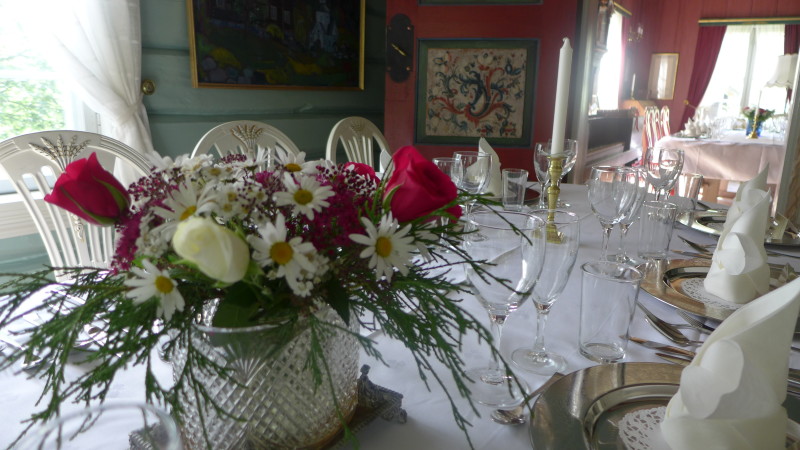
Nutheim Gjestgiveri
Welcome to Nutheim Guesthouse – "The Artist Hotel in Telemark"!
Artists came here to find inspiration. Here they were captivated by the peace, light, air…

Tuddal Høyfjellshotel
Welcome to Tuddal Høyfjellshotel. A small family-run hotel from 1895. Just two hours from Oslo, below Gaustatoppen in Telemark, we invite you to…